
From Local Vision to Institutional Architecture
Global capital does not fund generalists. It funds specialized, scalable, and de-risked assets. This advanced 7-pillar curriculum is designed for Caribbean entrepreneurs, NGO directors, and government officials ready to cross the “Valley of Death” and structure projects that speak the exact language of international Development Finance Institutions (DFIs) and global climate funds.

“Complete the 5-minute assessment to evaluate your project’s readiness, receive your track recommendation, and lock in your founding cohort seat.”
The 7 Pillars of Caribbean Economic Infrastructure
Launching in Term 2, this premium masterclass series dives deep into the highest-impact sectors for Dominica and the wider region.
Climate Resilience & Green Infrastructure
Structure bankable, climate-adaptive developments that access Green Climate Fund and DFI capital.
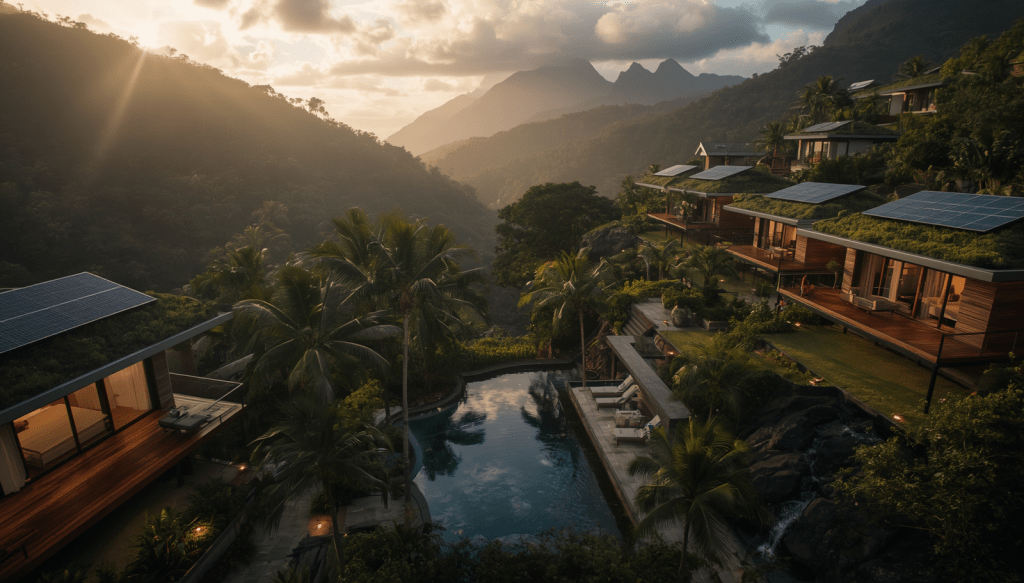
- Dominica is a global leader in climate resilience (e.g., CRRNT), yet local capacity to write proposals for the Green Climate Fund is limited.
- Designing eco-housing, resilient roads, and water catchment systems that meet strict international ESG criteria.
- Unlocks millions in grant and concessional funding, creating local engineering and construction jobs.
Sustainable Agriculture & Agro-Processing
Build export-ready, geothermal-powered agro-businesses that slash the Caribbean’s $5B food import bill.

- The Caribbean imports over $5 billion in food annually. We have the land and geothermal energy to achieve food security and become net exporters.
- Structuring commercial farming, greenhouse operations, and high-value agro-processing (essential oils, herbal products) into investable businesses with solid supply chain logistics.
- Drastic reduction in the regional food import bill and high-value export generation.
Eco-Tourism & Wellness Enterprise
Architect high-ticket, low-impact boutique retreats that capture the global luxury wellness market.

- The “Nature Island” brand cannot compete with mega-resorts. The high-yield strategy lies in boutique eco-lodges and high-end wellness retreats.
- Financial modeling for boutique hospitality, structuring land leases, securing tourism incentives, and creating high-ticket packages for the global luxury market.
- High foreign exchange earnings with low environmental degradation, directly benefiting rural and indigenous communities.
Renewable Energy & Energy Independence
Structure grid-scale geothermal and solar projects through Public-Private Partnerships (PPPs) to end diesel dependence.

- Caribbean nations pay some of the highest electricity rates globally due to imported diesel.
- Structuring Public-Private Partnerships (PPPs) for geothermal and solar projects. Mastering Power Purchase Agreements (PPAs) and tariff modeling for institutional investors.
- Drastically lowers the cost of doing business, making all other sectors more competitive while achieving carbon neutrality.
The Blue Economy & Marine Resources
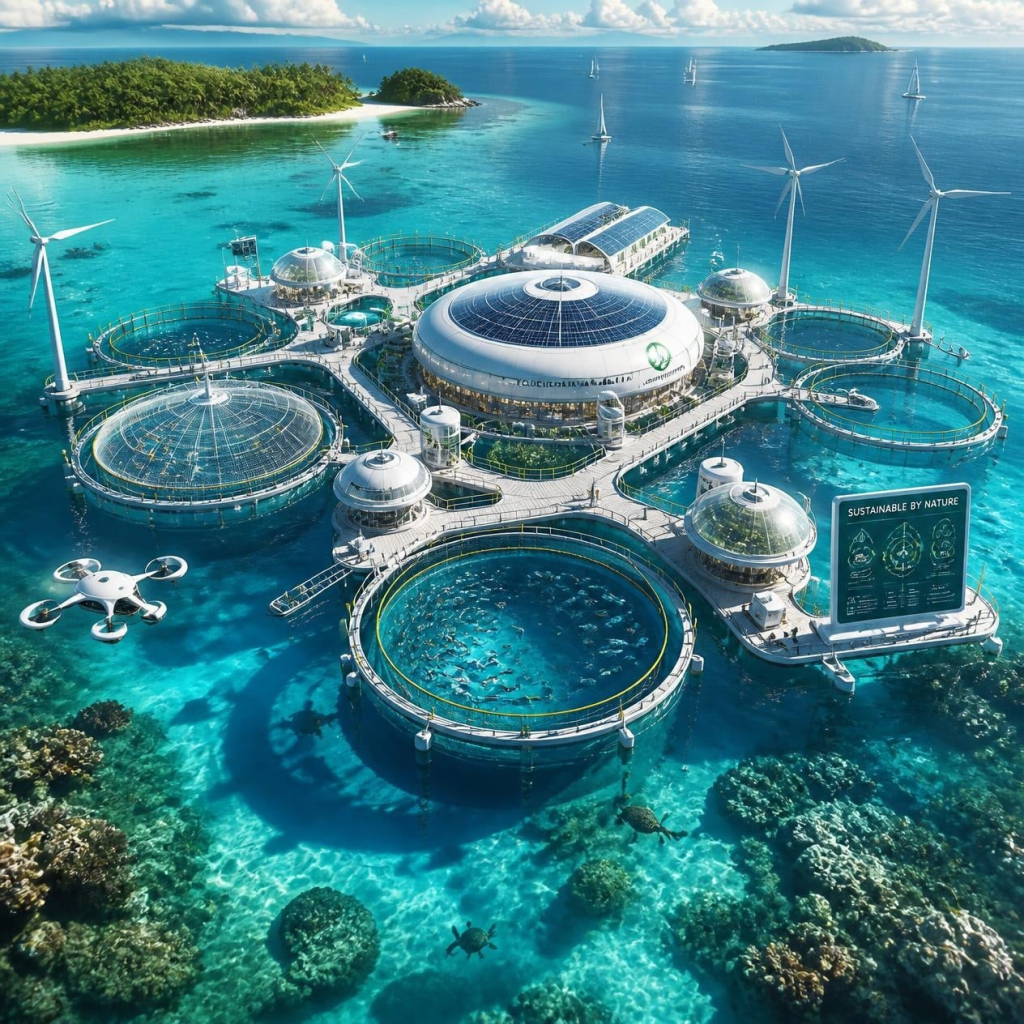
- The ocean is our greatest asset, yet marine resources are often under-monetized or over-exploited.
- Developing bankable projects in sustainable aquaculture, deep-sea fisheries, and marine biotechnology. Navigating maritime laws to secure “Blue Bonds.”
- Protects marine ecosystems while creating a highly profitable, sustainable maritime industry.
The Digital Economy & Tech-Enabled Services

- Geographic disadvantage is erased by the digital economy. Local tech entrepreneurship needs scaling to match our digital nomad initiatives.
- Building scalable tech hubs, BPO firms, and SaaS models. Protecting intellectual property and attracting venture capital.
- Creates high-paying, future-proof jobs for Caribbean youth, reversing the “brain drain.”
The Creative & Heritage Economy

- Culture is a multi-billion-dollar global industry. We must monetize our Kalinago and African heritage sustainably and protect our intellectual property.
- Structuring high-end artisanal cooperatives, elite cultural festivals, and luxury design. Pitching cultural projects to global arts grants and luxury investors.
- Preserves ancestral wisdom, creates wealth for artisans, and positions the Caribbean as a global hub for high-end cultural production.
What an Institutional-Grade Investor Actually Looks For
When a regional asset management CEO, a diaspora seed funder, or a DFI loan officer evaluates a Caribbean project, they are not evaluating passion. They are evaluating de-risked, mathematically sound, ESG-compliant yield.
They need to see:
- Dynamic Financial Models: Not basic budgets, but multi-year projections featuring Debt Service Coverage Ratios (DSCR), Internal Rates of Return (IRR), and rigorous sensitivity analyses.
- Bulletproof Safeguards: Formal ESG matrices detailing biodiversity protection, gender inclusivity, and structured community benefit agreements (especially for Indigenous Kalinago territories).
- Risk Mitigation: Binding off-take agreements, layered blended finance waterfalls, and political or climate risk insurance.
Horizon Bridge Academy does not just teach you how to pitch an idea. We teach you how to build the exact institutional architecture that makes global capital say “Yes.”
HBA Institutional Bootcamps: Custom Training for Your Organization.

Horizon Bridge Academy does not just train individuals; we build institutional capacity.
We offer customized “Project Bankability Bootcamps” designed specifically for the teams that drive the Caribbean economy. We can deliver this comprehensive curriculum directly to:
- Government Ministries seeking to improve grant-writing and project structuring.
- Regional NGOs and Cooperatives aiming to scale their impact and secure international funding.
- Diaspora Investment Groups looking to pool capital and structure viable projects back home.
Investment: Custom institutional pricing (Starting at $10,000 – $25,000 USD per cohort).
Access a Curated Pipeline of Bankable Caribbean Assets
Partner with Horizon Bridge Academy to evaluate, de-risk, and deploy capital into institutional-grade, ESG-compliant infrastructure projects across the region.

